

What's the Denture Process Like?
Unlike replacing a single missing tooth, dentures replace many or all of your teeth, which makes careful planning especially important. The process begins with a thorough evaluation of your remaining teeth, gums, and bone support so we can determine the most predictable path forward.

In some situations, teeth that are severely damaged or cannot be maintained long term may need to be removed before partial or can be made. Once your mouth is ready, detailed impressions and bite measurements are taken so your replacement teeth can be designed to work naturally with your jaw, supporting tissues, and bite.
Before the dentures are completed, you'll have the opportunity to preview how your new teeth will look, feel, and function. This step allows us to refine them together so you can feel comfortable approving the final result before they are made. During this preview, you can also make decisions about the appearance of your new smile, including the color, shape, and arrangement of the teeth as well as the shade of the gum-colored base that supports them.
Your removable dentures are then custom crafted by our trusted denture laboratory. When they are ready, we carefully fit and refine them for optimal comfort and function. Because dentures rest on gum tissue and supporting bone rather than natural teeth, a short adjustment period is normal while we fine-tune them and your mouth adapts.
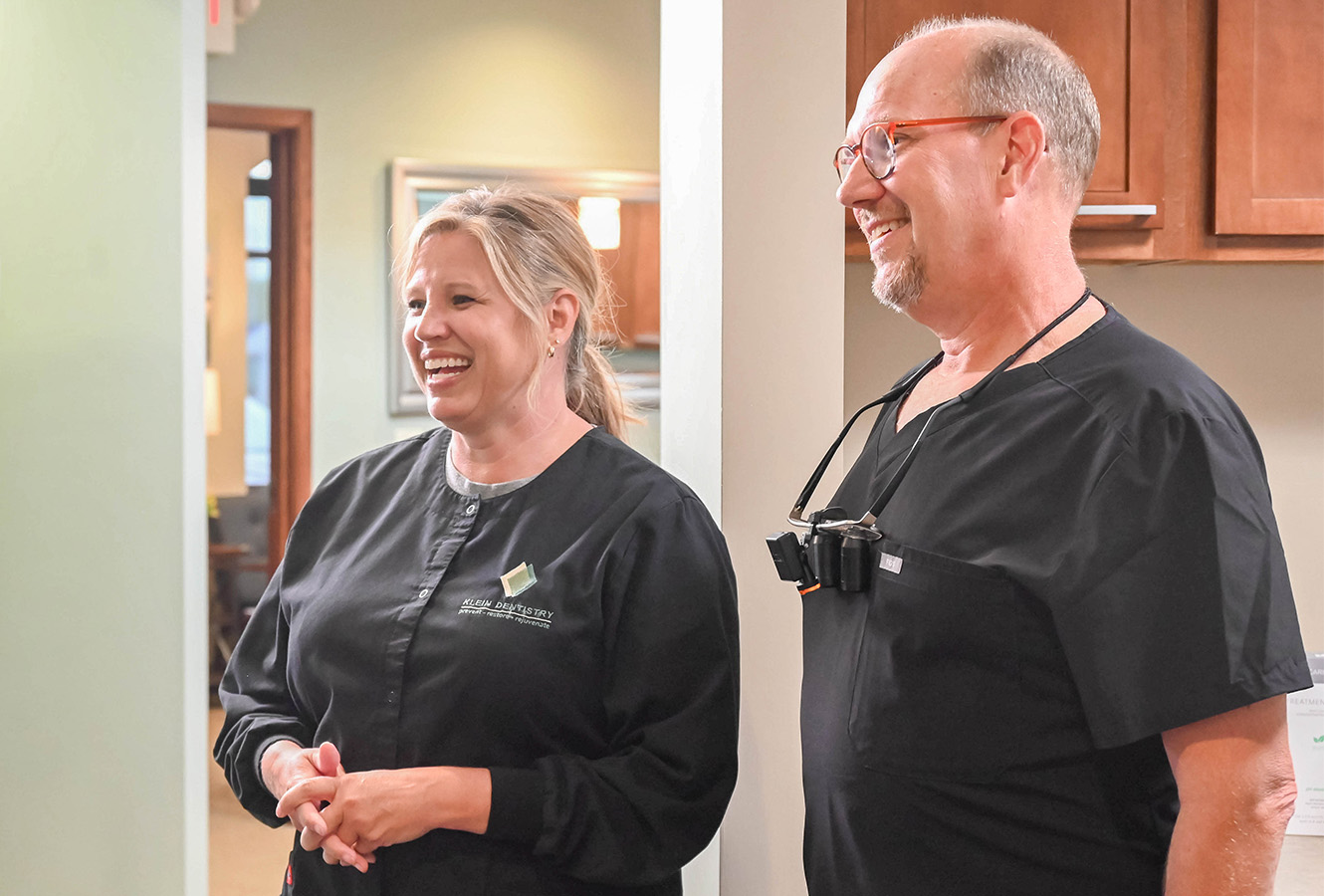
Denture Stability & Support
Many people have heard frustrating stories about loose dentures like how they move around, food gets underneath them, or that certain foods become difficult to eat. These problems are often related to dentures that lack proper fit, stability, or support.
Most patients adapt quite well to an upper denture because it rests against the roof of the mouth, which allows natural suction to help hold it in place. Lower dentures can be more challenging because the lower jaw has less surface area for support and the tongue is constantly moving in the same space where the denture sits.
Both jaws gradually lose bone over time after teeth are lost, but the lower jaw typically loses bone faster and begins with less support than the upper jaw.
Even with these challenges, carefully designed dentures from our Grandville, MI, dental office can still provide reliable function for many patients. Tooth and implant-supported dentures can also significantly improve stability and chewing ability for patients who struggle with loose or unstable dentures.
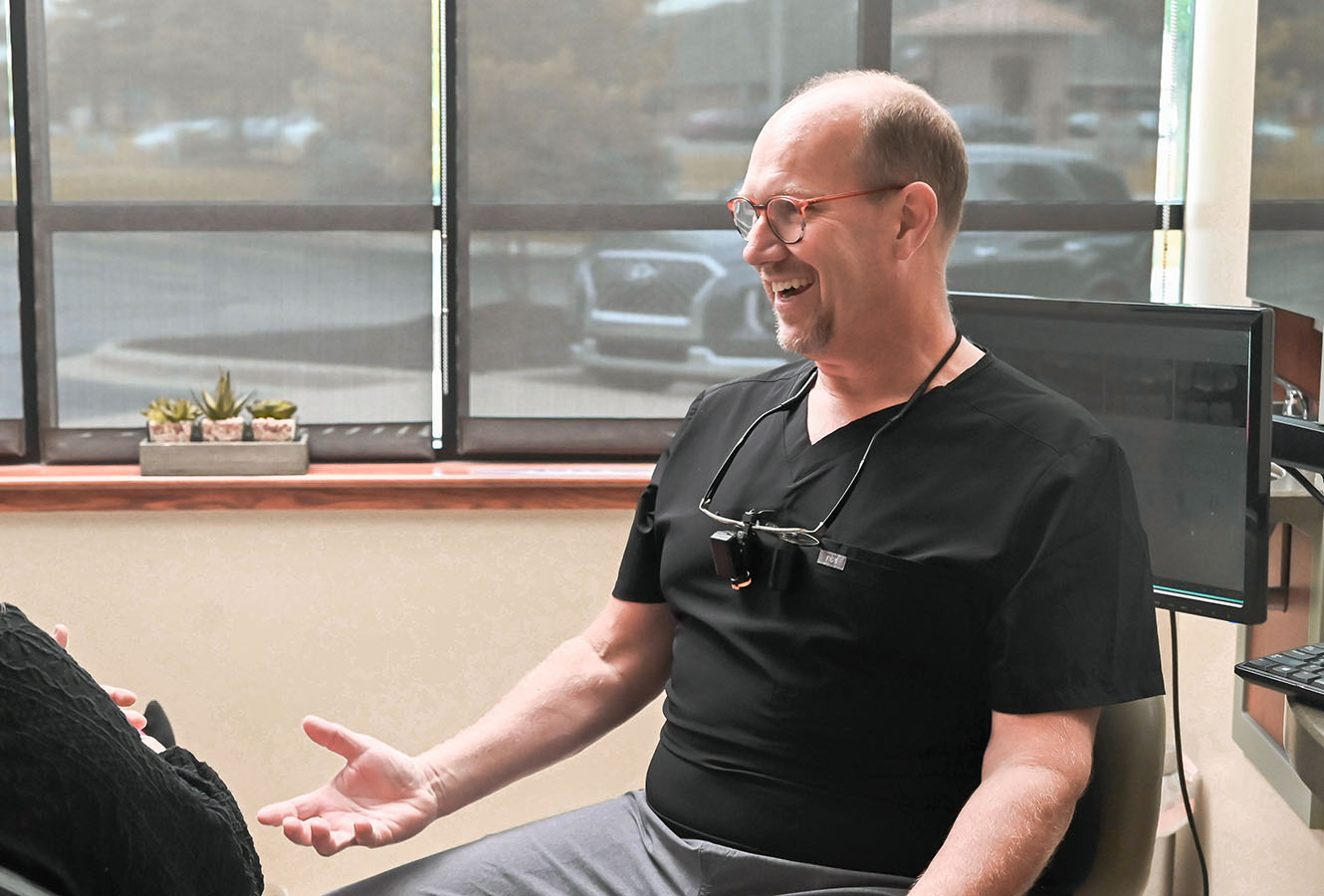
Denture Maintenance & Longevity
Like natural teeth, dentures require ongoing care and maintenance. The shape of the jaws gradually changes over time after teeth are lost, which means the fit of a denture slowly changes as well. also wear down with normal use.
Most patients can expect a set of dentures to last about 5-10 years, although every patient is different. Over time, adjustments, relines, or replacement may become necessary to maintain proper fit and function.
Even if you wear full dentures, regular dental visits remain important. Dr. Klein typically sees denture patients once a year to check the fit and function of the dentures, clean them professionally, and perform an oral cancer screening.
As with other aspects of dentistry, early intervention is important. If a poorly fitting or functioning denture isn't corrected, it can damage the underlying tissue and bone support and the denture itself.
Advances in digital scanning and modern denture materials now make it possible to accurately copy an existing denture in many situations. This allows a replacement or spare set to be made without starting the entire process over again, saving time and inconvenience. Most patients appreciate avoiding the situation of being without their teeth for weeks while a new denture is made.