

When a tooth is decayed or cracked, the repair should match the damage. Too little leaves the tooth at risk, and too much removes healthy structure for good.
Choosing between a filling, onlay, or crown is something our Grandville, MI, dentist weighs carefully for every tooth. Each option protects a different amount of the tooth, from a small spot to the whole visible surface.
Here's what you need to know about each restoration and when it fits.
What Does Each Restoration Cover?
These repairs run from the most conservative to the most complete.
- Fillings repair a small area of decay or a minor defect.
- Inlays are lab-made ceramic fillings that fit inside the chewing surface.
- Onlays rebuild part of the tooth, including one or more of its cusps.
- Crowns cover the entire visible tooth like a protective cap.
When Is a Filling Enough?
A filling works well when most of the tooth is still healthy. At Klein Dentistry, most dental fillings are placed directly in the tooth using tooth-colored composite resin.
Only the damaged portion is removed, so your natural tooth keeps carrying most of the chewing force.
When Does a Tooth Need an Inlay or Onlay?
Some teeth need more strength than a direct filling can give. Lab-made restorations, sometimes called , fill that gap between a filling and a crown.
An inlay is a custom ceramic piece bonded into a larger cavity, often on a back tooth that takes heavy biting forces. An onlay goes a step further and covers the damaged part of the chewing surface while leaving healthy structure alone.
Both preserve more of your natural tooth than a crown.
When Is a Crown the Better Choice?
A dental crown makes sense when a tooth no longer has enough healthy structure to support a filling. Dr. Klein may recommend one for a tooth that has:
- A large existing filling
- Cracks from biting forces or an injury
- Heavy wear from grinding or clenching
- Had a root canal
A crown can and keep a crack from spreading. Much like a cast on a broken bone, it holds the tooth together under chewing forces.
Years of teeth grinding are a common reason teeth reach this point. We cover how crowns restore worn smiles in more detail elsewhere on our site.
How Does Dr. Klein Decide?
Dr. Klein looks at how much healthy structure remains, how the tooth works in your bite, and the stability of the teeth around it. The goal is the most conservative option that will still last.
What Is the Process Like?
A filling is usually finished in one visit. Onlays and crowns typically take two visits, and the steps are much the same for both.
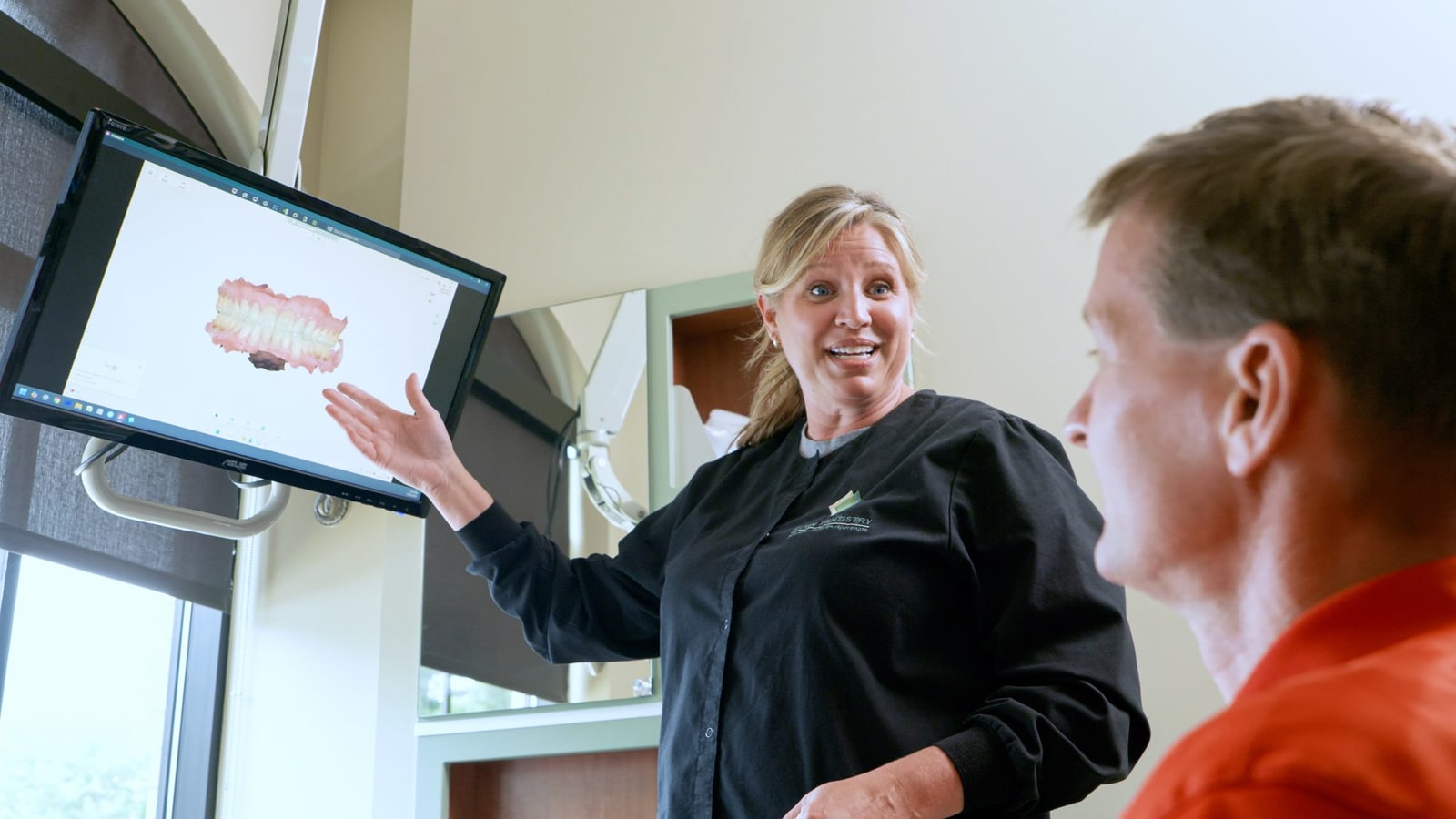
At the first visit, a 3D digital scan captures the tooth and your bite instead of a goopy impression. You can read more about what happens during the crown procedure before your appointment.
Why Does Timing Matter?
Most cavities don't hurt in their early stages. By the time a tooth aches, a small filling may no longer be enough.
Catching damage early keeps more options open. Crowns typically last with good care, and a smaller repair today can delay that larger one.
Frequently Asked Questions
Is getting an onlay much different from getting a crown?
Getting an onlay feels very similar to getting a crown at our office. Both usually take two visits, and the same general process is used for each.
The main difference is how the tooth is shaped. A crown needs the whole tooth prepared, while an onlay only covers the damaged area and leaves healthy structure untouched where possible.
What are fillings made of at Klein Dentistry?
Most fillings at Klein Dentistry are made from tooth-colored composite resin, placed directly in the tooth and polished to blend in. When a tooth needs more strength, Dr. Klein may recommend a ceramic inlay instead.
Inlays are made in a dental laboratory and bonded into place at a second visit. Because they're custom made, they can offer a precise fit within your bite.
What is a core build-up?
A core build-up rebuilds the foundation of a tooth when too little healthy structure remains to support a crown on its own. Dr. Klein first removes any decay and old filling material.
Then the tooth is rebuilt to create a stable base. Once that foundation is solid, the tooth is shaped and scanned so the final crown or onlay can fit securely.
Are Klein Dentistry's crowns metal or ceramic?
Klein Dentistry uses durable ceramic materials for crowns. Ceramic closely resembles natural enamel, so a crown can blend in with the teeth around it while still handling everyday chewing.
Each crown is made by a trusted local laboratory from a 3D scan of your tooth and bite. At the second visit, Dr. Klein checks the fit, appearance, and bite before cementing it in place.
Why would a tooth that doesn't hurt need treatment?
A tooth can be weakened or decayed long before it causes any pain. Cracks, large old fillings, and early cavities often have no symptoms at all.
The Cleveland Clinic notes that a cavity that reaches the inner pulp can no longer be fixed with a filling. Treating a tooth before it hurts usually means a simpler, more conservative repair.